Stoic Saturday: Don’t Worry About It

At what point in our lives do we start to become so aware of what other people think? Little kids don’t care. My daughter will break out into full song in the middle of the produce section and not give a second thought as to what the stranger buying avocados thinks about it. But somewhere along the line (probably middle school) we find ourselves doing, or not doing, something based on what somebody else will think about it. Possibly worse, we end up creating unnecessary amounts of mental stress over it as well. Marcus Aurelius says this is a waste of our time. And he’s right.

Don’t waste the rest of your time here worrying about other people – unless it affects the common good.

As we’ve talked about before, your time is an extremely limited resource. Of all the things you can spend your time on, concerning yourself with the thoughts of other people should not be at the top of your list. Especially when it comes to parenting.

Ask 50 parents the best way to do something and you’ll probably get 50 answers.

“Go ahead and use a pacifier.”

“Never use a pacifier!”

“Use a pacifier but only at nap time.”

“What about the nipple confusion?!” – As a complete aside, how great is the phrase “nipple confusion”?

Food, discipline, bed time routines, potty training – you name it and there are a wide array of opinions out there to be found. Both expert and otherwise. The best case scenario is you are actually trying to find them. More often than not, parenting opinions are not discovered, but rather thrust upon you in a lobby. Each can have their value at the appropriate time, but each can also drive you absolutely crazy. Either way, don’t waste time on it.

Find a trusted advisor. Find a source of truth. Maybe that is your own parents, maybe that’s your pediatrician, maybe it’s some really cool guy who writes online about being Dad. Ultimately, you need to create filter for outside opinions, and do what you know is right. Let the rest of the noise fall on deaf ears. If you don’t have the same parenting philosophy as your in-laws (shocking, but believe it or not it could happen), don’t spend a second of your time thinking about what they think about how you parent. If you find yourself wondering how you measure up to the parent ahead of you in the pick-up line at school, realize what you’re doing and change your train of thought.

Remember too, that there is a flip side to that coin. If you see a parent doing something you wouldn’t do, so what? Don’t worry about them, and certainly don’t offer your own unsolicited advice. What could you have done for your own children while you were going out of your way to dispense your self-perceived parental wisdom?

While we shouldn’t be constantly concerned with what a social media influencer thinks about parenting, we can’t ignore the caveat that Marcus gives – “unless it affects the common good.” So, should you butt into a situation a parent is having with their kid? No. But if that situation impacts the safety or wellbeing of others, then not only should you, but the case could be made that you have an obligation to.

I know it is a tricky time right now to talk about the common good, but it matters. The heath, safety, and prosperity of the whole matters more than inconveniencing the individual. Doing what’s right as a parent, not just for your kids, but for the whole of society is important. What is good for the whole is good for the individual. So before you spend any time or effort worrying about other people, ask yourself – is what they are saying or what they are doing having a real impact on the common good? If no, then get on with your day and pay them no mind. If yes, you still shouldn’t worry, but act. Remember, Stoics aren’t just thinkers, they are doers.

Today’s takeaway: Don’t worry until you have something to worry about.

Kids Ruin Their Own Good Time

More than ants at a picnic, rain at a parade, or Tom Brady at a Super Bowl, nothing ruins a good time like a kid who’s having a good time. Actually, I take that back. Parades aren’t fun in the first place, so there is no good time to be ruined. Attending a parade at all ruins the fun you would have had doing something else. Anyway, a kid’s good time will inevitably end by their own doing.

What parent hasn’t seen this scenario play out before? Your kid is having a good day – they’ve listened, they’ve shared, maybe they even lasted a whole car ride without crying. Such good behavior deserves a reward, so you decide they should get a treat! Yay, ice cream! A kiddie cone and some sprinkles blows their little mind. And their good day. The excitement of the fun day combined with the sugar of the ice cream is just to much for them, and the next thing you know they are covered in melted ice cream, quickly covering everything they touch in melted ice cream, and not listening to a word you say because they are just having so much fun. The fun day now ends with you demanding they be quiet and listen, and stop touching that, and sit still, and be quiet. Onlookers must look at you and wonder how you could be in such a bad mood while doing something as fun as having ice cream. What kind of wet blanket are you? Are you a bad parent or something? Let me tell you, no, you aren’t a bad parent. You just waited to keep the fun in check.

Much like every action has an equal and opposite reaction, every child’s mood has an equal and opposite mood. Laughs inevitably turn to cries. Being grumpy will turn to being giggly. Being tired will turn to being awake for hours past bedtime. I’ll call it the Third Law of Emotion. I’ll come up with the first two later.

As a parent, you have now moved from being the fun parent who got them ice cream to being the fun police. I get that temperance is a virtue and you need moderation in all things, but it just makes you feel like you’re being the kind of parent you never set out to be. It turns out an under-appreciated part of parenting is the ability to allow your kids to have fun, but not too much fun, and I’m not sure I know how to do that.

Rather than reward them with ice cream, should I give them cottage cheese? I mean, it’s still cold dairy? When they are running around being silly, should I inturrupt their fun to remind them about the shots they’ll get at their next doctor’s appointment? Maybe knock over thier Lego tower for no reason? Where is the line on what is keeping them in check and what is being a dick? Who’s to know? But I do know that letting their good time get too good will end badly.

Which sucks, but is also why the fun parent isn’t always the good parent. A major part of he job is protecting your kids, mostly from themselves. I’ve spent infinatly more time not letting my kids eat as many chocolate chips as they want than I have baby-proofing the house. I’m yet to have a kid try to shove something in an electrical socket, but I have had three kids try to shove a pound of chocolate in their faces. Would it have been fun to see them try to chew fistfulls of ghirardelli, yes. Would the aftermath of wound up kids leaving chocolatey fingerprints all over the house have ended in tears? Without a doubt.

Dad just can’t be that fun. Uncle can be sometimes. Hell, grandpa can see their chocolate chips and raise them gummy bears. Dad needs to keep everything in check. At least until the kids are old enough to keep to the promise of not telling mom.

Bathroom Humor: A Parent’s Conundrum

Kids are funny. Though almost never on purpose – their jokes are terrible and they have essentially no sense of comedic timing. But they say and do all kind of ridiculous things thant make you laugh. On one hand, this makes parenting very entertaining. On the other, there are many times when you can’t laugh at your kids. There are also some topics that you can’t laugh at. These worlds collide in the bathroom.

We have been trying to stop our kids from asking for a thousand different things after we’ve tucked them in for bed with little success. On an average night, my daughters will ask for a drink of water, the fan turned on, the fan turned off, music turned on, lotion put on, a tissue, ask to go to the bathroom. Naturally, these requests never come in combination, and neither child asks for something at the same time as their sister. To put a stop to this, we’ve established that they don’t need to ask to go to the bathroom and we are really encouraging them to take care of everything themselves. We find that they don’t really need help wiping, it just depends on if they are in the mood to do it themselves. It is a big step for a parent when poop removal no longer takes up so much of your day.

Last night my three year-old daugher Evie did it almost perfect. Without saying a word, she got out of bed, went into the bathroom, and started to take care of business all by herself. Then she called for me. For no particular reason, she used what I assume was her interpretation of a southern accent that boarded on a terrible Forrest Gump impression.

Evie: “Da-day”

At first I ignore her. I need to stick to my guns to break these bad habits, and I find that ignoring your children can be a really effective parenting technique in most situations.

Evie: “Da-day. Da-day. Da-day.”

Her repeating this in consistent intervals was enough to get a response, but I sure wasn’t going to get up off the couch.

Me: “What?”

Evie: “Da-day!”

Me: “What?!”

Evie: “I have pewp on my un-days.”

Me: “Why?!” I asked legitimatly scared of the responce.

Evie: “I tooted and some pewp got on my un-days.” She stated very matter of factly in her newly aquired faux southern drawl.

I looked at my wife, she looked at me, and we lost it. I broke like Jimmy Falon in Debbie Downer. I couldn’t go help her while failing to hold back laughter with tears in my eyes. I needed to treat this like a normal, no big deal thing that sometimes can happen. I coudn’t embarrass her, or even worse, give her some kind of signal of encouragment that sharts were funny and should become a normal part of the bedtime routine.

Also, you can’t let kids know that poop actually is quite funny. This is one of the bigger challenges in parenting. You need to treat bodily things very matter-of-factly. You don’t want them to talk about them, but you also don’t want them to feel ashamed to talk about them, but they have to talk about them in the right time and place and with the right people. So even though its funny, it can’t be funny, and even though its ok to talk about it, you better not talk about it dinner. Or breakfast. Or church. Or the grocery story. Or school. But its natural and normal. But don’t do it whenver you feel like it. Who knew poop talk would be such a fine line to walk?

And I wonder, at what point can we inform our kids that poop humor is not only acceptable, but hilarious? Perhaps this would be a good time to point out that I have the sense of humor of a twelve year-old. In the process of my maturity and development my sense of humor stopped while the rest of me kept going. Apparently, after listening to The Goat while I was in the seventh grade my sense of humor was like, “Ya know what, I’m good here. The rest of Pat, you keep going, but don’t wait for me.” For a few years my metabolism stayed behind to keep my sense of humor company, but he came sprining to catch up. So here I am now – poop is funny but the prospect of digesting a Whopper is no laughing matter.

Anyway, I dug deep, I bit my lip, I focused on the task at hand. Much like my daughter just did. (See, poop jokes are funny!). I collected myself to aid my child in her time of need. And like every good story, this one has happy ending – there was nothing on her undies. I assume for a moment my child chose to embody an old gentile southern belle with irratable bowl syndrome. Oh the imagination kids have!

I still don’t know when the right age is for it to be ok for kids to see the humor in poop, but I sure to hope it is before my daughter is old enough to read this.

Daddy loves you, Peanut.

An Important Lesson for Kids: Life Isn’t Fair

My kids are getting to the age where they are questioning why other kids have something they don’t have or get to do something they can’t do. Part of it is the age. They are still too young to do things they see other people doing, like stay up late or get a big piece of cake. Part of it is the choices we make as parents. Like not letting them stay up past their bed time, or keeping the big piece of cake for myself. Which by law is the right of every dad. It’s true. I’ve never looked it up, but I’m pretty sure its one of the amendments. I think Taft was behind it. Anyway, it has brought up an opportunity to teach am important life lesson – life isn’t fair.

While thinking about this, I realized the way we teach the concept of fairness to kids is contradictory. First we tell them to do things because they need to be fair – share toys, take turns, play nicely, follow the rules. Then, once we’ve pounded that into their heads to the point where they can move on from complaining that their sister is being mean to me to their sister isn’t being fair, we introduce them to cold hard reality that life isn’t actually fair. There are adults who have a hard time grasping this concept, so how can we expect a kid to understand?

Are we doing the wrong thing by trying to instill the need for fairness? I’m not saying that we shouldn’t teach kids to share, take turns, and play nicely, but perhaps we shouldn’t be telling them to do it in the name of fairness. I think we’d be better off teaching them to act in the name of doing it because it is the right thing to do. What seems like simply swapping out one word for another may seem minor enough, but it could actually make a big difference in the development of their character.

If I continuously tell my kids that they need to do things because of a need to be fair, they place an importance on the concept of fairness. A concept that will inevitably be torn down. A sports radio host used to say, “Fair is a place to buy a pig.” True words for both the competitive balance of the Big Ten and life in general. I want my kids to understand what is fair and what is unfair, but I’d rather have them act out of a desire to do what they think is right, not what they think is fair. I’d love to have them embrace the perceived unfairness as a means to overcome a challenge and build character, but that is probably asking too much of kids who are still working on such complex concepts as the indoor voice.

Here I am now in the awkward position of simultaneously telling them that one of them will get the orange plate today and the other will get it tomorrow because that’s fair, and also that they don’t get to have the same toys as other kids because things aren’t always fair. So when it becomes a matter of them getting upset because they can’t do or don’t have something that somebody else does, I shift away from fairness to a concept that they already understand – everybody is different.

I know they firmly understand that concept because Daniel Tiger told them that in someways we are different, but in so many ways we are the same. Of course he did it in a tune that is forever drilled into both their brains and mine and we couldn’t forget it if we tried. Well played Daniel Tiger. But they understand it none the less. They already apply this concept to why somebody is taller, shorter, lighter skinned, darker skinned, or anything else they recognize as different from them. Why not apply it to non-physical traits? Somebody else getting an ice cream sundae while you get a kid sized cone isn’t something that is unfair to you, it’s just that that kid is different. You get a scoop, they get a big sundae. You made a healthy choice, they are one step closer to juvenile diabetes.

So I’m going to throw fair out the window and focus on doing what is right and being ok with everybody being different. I assume there will be a flurry of “Why?” headed my way, but with little kids in the house I get a couple hundred of those a day anyway, so what’s a few hundred more?

Stoic Saturday: Achieve Your Freedom

Parents laugh at the the idea of free time. Yes, kids cost money, but the resource they use the most of is time. And that is fine. Spending time with your kids is why you become a parent. However, you still must use time for yourself – to improve yourself, to grow yourself, and, as Marcus Aurelius says, to free yourself.

There is a limit to the time assigned you, and if you don’t use it to free yourself it will be gone and will never return.

Time is our most limited resource, though unlike a bank account, we have not balance sheet. There is no way of knowing if we have an abundance of time left, or if we are down to our last second. So much of this precious resource is wasted, and we don’t even realize it. How then do we use it to free ourselves, and what are we freeing ourselves from?

I think the Stoic would say we need to free ourselves from the distractions that prevent us from pursuing a virtuous life. What uses your time and leaves you with too little time left in the day to pursue wisdom? I find myself trying to set time aside every night to read, but by the time the kids are asleep I watch the last This Is Us, or stay up to see the end of a baseball game, and then I’m too tired to focus and absorb the information. Sure, I enjoyed watching the baseball game, but would that time have been better used on wisdom than entertainment?

What about the time I spend with my kids? Am I using that impart – and gain – wisdom? Do I rush through explaining something because I say I don’t have enough time? I know I have. Have I lost patience with my kids because they are still learning how to do something and it takes them more time. Time that I don’t think I have to lose. Time that I could spend doing something virtuous, like watching baseball. When it comes to kids, I don’t think it is doing the annoying, or the boring, or the difficult things that we need to be free from. Time with our kids is the virtuous thing, it is the things that distract us from our kids that we need to be free from.

Do I want to read the same book for the hundredth time? Not really. Is that time well spent? Absolutely. If I slow down to explain something to my kid rather than rush through it, am I saving time or am I using my time wisely?

My kids are a little young to understand justice. Anything beyond why one of them gets ice cream and another one doesn’t is a bit over their heads, but when they get old enough to understand the need to do the right thing simply because it is the right thing taking the time to explain that to them will be time well spent. Time spent freeing them ignorance that breeds injustice, and time spent freeing my self from worrying if I have prepared them enough for life. For not I’d settle for them doing something because I told them to.

And what about temperance? How much time spent devoted to excess or addiction would be better served else where. Better served freeing you what whatever stops you from whatever keeps you trapped. Do you really need to stick around the bar and have one more round when you could go home and help put your kids to bed? Do you really need to buy your kid every new latest and greatest toy? I am sure your kids would appreciate time spent with you more than they appreciate your commitment to consumerism.

Time is limited, especially time spent with your kids. I think I’d rather use it to free myself than waste it on a treadmill.

Today’s takeaway: Maybe not as easy as it sounds, but figure out what I need to be free from.

Fighting Dad Stereotypes: Dad Can Fix It

In my ongoing effort to address Dad stereotypes, I want to remind you that not all stereotypes are necessarily negative. I know we’ve all heard them – certain groups of people are good at math, certain groups of people are good at sports, guys who write blogs about being a dad are handsome. Heard them a thousand times, and they seem complimentary. However, these set unfair expectations that people often feel pressured to live up to. There is one seemingly positive stereotype for dads as well – dad can fix it.

Many times dad becomes the fixer of things not because he is inherently handy, but by default. Why? Because dad can fix it. Right? Sure, maybe he can, but just because somebody is a dad does not mean that person can fix a toy if it breaks, or assemble a play set, or build a tree house. Much like one’s ability to purchase a home in no way correlates to their ability to complete home repair projects, one’s ability to make a child in no way correlates to their ability to fix something their kid breaks. But the expectation is that they can, and should.

To me this feels straight out of the Eisenhower administration. Mom cooks dinner while dad is out in the garage fixing little Timmy’s bike and tuning up the Oldsmobile. And he got a well-paying job without a college degree or student debt to boot! Well, it’s a brave new millennium. Dads can make quinoa and not like to fix stuff. And – brace yourself – mom can turn a wrench too if she wanted.

I would say that I am moderately handy and can assemble/install/repair a decent amount of things around the house. I am even an expert on home improvement according to Redfin don’t you know. I am no stranger to some assembly being required, and I have amassed a decent sided collection of tiny Allen wrenches. However, there is a big difference between replacing a ceiling fan and replacing the ceiling. This can be a terrible skill level to have. Because I can fix somethings, should it be assumed I should fix all things? Or even most things? Because I can build something, should it be assumed that I even want to? Yes, I own tools and know how to use them, but on most occasions I’d rather take one of those tools and bash myself on the pinkie toe than waste a Saturday using them to fix something around the house. Projects are a necessarily evil. I love the joy the swing set in our backyard brings our kids, and it wasn’t going to build itself, but that is eight hours of my live I can’t get back.

I think the sweet spot for a dad’s handiness skill level is the area of quick diagnosis. I want to look at the toy that isn’t working and quickly determine if it needs new batteries or is now trash. To spend less than five minutes looking at something to see if it is a matter replacing one part (preferably easy to reach), or calling a professional. And let’s be clear, there is no shame in hiring a professional. Tied up into the dad can fix it stereotype is the idea that fixing stuff should be a matter of pride. You know what’s a matter of pride? Being good enough at your actual profession so that you get paid enough money so you can give some of that money to somebody whose profession is to figure out why the hell the furnace keeps making that sound. Between the job of whatever his actual job is and the job of being a dad, let’s not expect dad to be a licensed HVAC technician in his spare time.

How many hours have been wasted, how much needless anger and frustration have dads imposed on themselves, how many kids were introduced to swear words all in the name of dad trying to fix it? And for what? So we can try to fit a role that was thrust upon us. So we can force ourselves to fit the stereotype rather than admit that we can’t fix it. So we can make good use out of that Home Depot gift card we got. Well they sell grills at Home Depot too, so throw on some burgers, crack a beer, and tell Timmy you aren’t going to fix his bike and that he should have been more careful with it. You’ve gotten out of fixing something and you’ve taught Timmy a lesson in responsibility – look at you being a good dad.

Are there dads out there who can fix anything? Yes, and good for them. Are there dads out there who don’t know a channel lock from a socket? Yes, and good for them too. Their Saturdays are their own, and I’m sure their kids aren’t any less happy. I feel like somewhere in between is where a lot of dads are. Walking the fine line between making one more trip to Lowe’s and just throwing that piece of shit in the trash and getting a new one. A stereotype tells them to fix it, their confused pride tells them not to let their kids down, and the YouTube video they looked up tells them it shouldn’t be that hard – you too can fix that thing in just five easy steps! But we aren’t all Bob the Builders and that’s ok. Can we fix? I don’t know, maybe. Let’s go get ice cream instead.

I Don’t Care If My Kids Learn To Ride a Bike

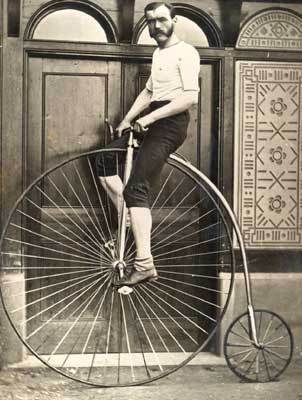
One of the iconic Dad moments is teaching your kid to ride a bike. You can all picture it clear as day – little kid all wobbly on their little bike, dad running next to them holding on, kid telling dad not to let go, and dad lying to them telling them that he won’t. A classic right of passage for kid and parent alike. A tradition as old as bikes. I imagine sepia toned scene in which a young father with a handlebar mustache running beside his knicker-clad child as they try not to take a header off one of those giant front wheel bikes. Well, this is one tradition I have no interesting in maintaining.

Right now my kids are little and in the tricycle and training wheels phases of bike riding. This means they spend roughly as much time getting their helmets on as they do actually riding their bikes. Most of the times they ride their bikes ends about three houses down the street when they either fall over or just give up because its too hard to ride the bike over a stick, an ant hill, or the crack in the sidewalk. Either way, it ends with me carrying the bike back home while they cry.

For my younger daughter, the one exception to this is when she did manage to ride her tricycle all the way around the block. It took roughly three hours. My older daughter has been able to go multiple blocks, but no ride has ever been successfully completed. At some point she falls, almost falls, or forgets how to stop, panics, and ends up taking a pedal to the shin. Any combination of these end in tears, and me carrying the bike home. I get that they are young and they are just learning, but this also means that they are not yet committed to it. Now would be the time to pull the plug and go bike-free. I am seriously considering it. Here’s why.

Bike Riding Is Not a Valuable Life Skill

Kid’s minds are like little sponges. They can learn pretty much anything, so why waste the time and effort on teaching them to ride a bike. Take the time you would have used waiting for them to skin their knee and come back crying and use it on teaching them another language. Bi-lingual employees can increase their base pay by 20% more per hour than those that only speak one language, even if the person that only speaks one language had a really sweet Mongoose when they were 12. Studies on pay rates compared to whether or not somebody’s bike had pegs are inconclusive.

Or a musical instrument. Kids that play a musical instrument tend to do better academically, and helps them regulate their emotions. No official word on the academic performance or emotional intelligence of kids who took their bikes off sick jumps.

I have wanted to get my kids a Power Wheels Jeep from the minute my first kid was born. At that time my wife’s argument against it was that they can’t even hold their heads up yet. Valid point. Her argument against it now is that she fears they will just want to drive that and won’t want to learn to ride a bike. Which is a valid point for getting the Power Wheels Jeep. Driving a car is a much more important skill to master than riding a bike, why not get a jump on it early? And it is a skill they were use longer too. My oldest daughter is almost five, so even if she masters the bike tomorrow she has about a 10 year window for prime bike riding. She’ll get use of her skills behind the wheel for 50 or 60 years. So yes, I’d rather spend a few hours showing my kid how to drive a plastic car than spend months showing them how to ride a bike. That’s just basic ROI.

Bike Riding Is Not Great Exercise

I know what you’re thinking, kids need to be outside and be active and riding a bike is a great way to do that. I agree with almost all of that. Yes, kids need to be active, I totally agree. However, bike riding is not a great way to do that. If we look at it as purely a means of exercise, it is not as good as running. So I’d rather my kids run around in the yard playing tag or soccer or whatever than ride a bike. Or better yet, go jogging with me. They are a little young now to keep up, but they have already shown an interest in it. When they get older that could be a great time for some father-kid bonding, and a better workout than riding a bike. Also, little to no learning curve. One foot in front of the other and don’t trip, sticks or ant hills or cracks in the sidewalk be damned!

I also understand the counter argument of bike riding being a way to add exercise into transportation. For me, if something is close enough where I want to add exercise to the equation of me getting from point A to point B, just walk. I’ve walked an 8 mile round trip to the brewery. Got my exercise in and didn’t have to worry about operating any machinery under the influence. Win-win. If it is so far that walking isn’t an option, then drive. Time is a limited resource, so if you’ve got some place to get to, don’t waste it pedaling.

Bike Riding Is Not Actually Fun

A family out for a bike ride looks like a pure family fun, right? Or is it a row of people looking at the butt of the person in front of them? No conversions are had on bike rides. No skipping, hopping, or pretending to waddle like a penguin can be done on a bike ride. No stopping to pick flowers or pick up a cool looking rock. That is what kids find fun, that is family bonding. Look at the joy on a kid’s face when they pick up a really big pine cone on a walk. You want to rob them of that? How dare you.

Wouldn’t it be fun to take bikes with us when we go on a trip? In a word, no. Not only more to pack, but this also adds the element of bike rack and trailer hitch to situation. So now you’ve bought bikes for everybody in the family and additional hardware for your car all in the name of getting a sore ass while you’re on vacation. Pass.

Like most things with little kids, I am sure bike riding will get easier. They will learn eventually, and they might even be able to make it around the block a few times without bleeding or crying. But is the frustration for everybody between that point and now worth it? My gut says it absolutely is not, but we’ll do it anyway. All because in 1874 some schmuck with a handlebar mustache ran down the dirt road next to his kid on a ridiculous bike and everybody went “awwwww.” Thanks jerk.

Stoic Saturday: Your Happiness Is Different Than Your Child’s

Once you are a parent, to a certain extent your life is not your own. So many of your actions and thoughts are dictated by the actions of a your kids. Yes, you should focus on your kids. Yes, you should take pride in being a good parent. But know where the dividing line is between their life and yours.

Everyone gets one life. Yours is almost used up, and instead of treating yourself with respect, you have entrusted your own happiness to the souls of others.

I think what Marcus Aurelius is saying here goes back to the practice of focusing on what you can control and not wasting your thoughts on what you can’t. What is going to happen will happen, and other people are going to do what they are going to do – even your kids.

We give so much of ourselves to our kids, all in the name of raising them to be good people. Or at least what we think will be good people. I don’t think any parent intends to raise their kids to be selfish, or arrogant, or ignorant, or hateful, or lacking a moral compass. Yet we see these people. They exist, and they did not come from nowhere. If your child make poor choices and not absorb what you taught them, should your happiness suffer?

We can continue to try to teach them, to model the right kinds of behavior, to attempt to show them the error of their ways, but at the end of the day our happiness and our peace of mind should come from the decisions we’ve made for ourselves. If we are living a virtuous life, and doing all that we can to raise our children to be good people, that is what should bring us happiness – not necessarily the outcome. We don’t control the outcome. Try as we might, once our kids are out there on their own their happiness is theirs and ours is ours. Can you take pride in your kids? Absolutely. Can watching them bring you joy? Absolutely. Should your joy in life be completely dependent on them? No.

Even though you have a life that depends on you, your life is still your own. You were a whole person on your own before kids came along, don’t forget that you are still your own person now. Everyone gets one life, right? Marcus warns us that yours is almost used up, and compared to your kids it certainly is. Depending on the age of your kids, they could literally have their whole lives ahead of them. You might be coming down the home stretch. Continue to make the best use of your life, in all aspects, not just parenting.

Have you sacrificed time for reading, meditating, or journaling in the name of being a parent? After you’ve had kids, do you still make time to run, or hike, or bike? I think a lot of parents let these things go because they need to devote so much of their time to their kids, and taking the time for themselves feels selfish. However, taking care of yourself – mentally, physically, spiritually – will make you a better parent for you kids. If you are taking care of your own happiness, that will be reflected in your kids.

Today’s takeaway – take some time to develop and maintain good habits that will increase your happiness. Don’t do them with your kids, but model them to your kids.

An Effective Parenting Technique: Throwing Socks

There are parts of parenting that I am better at that others. One thing I make an effort, and I think I do pretty well at, is not to lose my temper with my kids. I can probably count on one hand the times I’ve actually yelled at them. And my “them” I pretty much mean my oldest daughter. She can be a stubborn little shit (which she just might get from her old man) and there have been a few times when she pushes past the point of reason. I don’t think I have ever yelled at my younger daughter. She is dainty and delicate, and I am pretty sure if I ever yelled at her she would melt into a puddle of rainbow colored tears.

While I don’t verbalize my frustration with them, there are definitely times when my frustrations are communicated very clearly. I find an effective way to do this is to fire some laundry across the room.

A few days ago my daughter asked me to pick out her clothes in the morning, so I did. A dress, some pants to wear under it, a clean pair of undies, and a pair of socks – all laid out on her bed. Naturally, she took issue with my choice of pants. She didn’t want me to just pick for her, even thought that is explicitly what she askef for, she preferred I present her with options. Fine. I grabbed another pair of pants and laid that one out as well for her to pick from. Wrong again pops.

Apparently, what she really wanted was for me to hold them up for her, so she could pick between the two. Fine. I held them up. She picked. I turned to walk out of the room so I could help get the other two kids ready, and she snaps at with “No! What about socks?”

A dad can only be pushed so far.

“Oh, you mean these socks?” I asked as I held up the socks that I had already picked out. “I already got them for you, but if you’re going to talk to me like that you can get them yourself.” I replied in a very calm voice, as I chucked her socks out of her open bedroom door. They landed half way across the house. I haven’t played baseball in quite some time, but in the moment it was good to know I’ve still got it.

I calmly walked out of her room and went to get her little brother and sister dressed – who of course were eating it up. “I’m being a good girl Dad.” is often uttered by the younger sister when she senses the older one is in trouble. The yin and yang that keeps a multi-child house functioning.

As I was getting them dressed I could hear her sobbing and sniffling in her room. For a moment I felt bad. Was that a bad choice? Should I be setting a better example? I suppose I could have explained to her the right and wrong way to talk to me. I could have shown her that I was just trying to do my best to help her get dressed. Maybe just show that there were in fact socks there. Yes, each one was an option. But the satisfaction of chucking those socks was really quite something.

I mean, sure, even if a loss of temper isn’t vocalized, it still is a loss of control in the moment. But on the other hand, what’s the harm? It’s not even the first time I’ve thrown their socks. On more than one occasion I have thrown their socks in their faces when they were being too silly and not getting dressed.

“Don’t want my help getting your socks on? Ok, do it yourself,” As they catch a face full of cotton.

Thinking about it, I have used the same strategy with other things too. Stuffed animals have been thrown across the room. Shoes have been thrown down stairs. Pacifiers have been fired against a wall. But I’ve never yelled, and I’ve never hit. Only inanimate objects have born the brunt of my frustration. Though I am careful not to take it out on the good toys. I’m not about to send a replica Buzz Lightyear face first into a closet door, but a generic stuffed bear? Brace for impact pal.

Ok, the technique is questionable, but the results are real. After she pouted about it, my daughter went and trekked down her socks and put them on without a peep. She hasn’t had an issue getting dressed since. So is the value of a teaching method in the method, or in the result?

I’ll take the result.

Telling Your Kids About Your Will: Exciting Stuff

After we had kids, my wife and I made the responsible decision to make a will and decide what should happen to our kids if we die. Fun stuff. I don’t know how it would have came up in a conversation with a 4 year-old, but apparently my daughter knows that should we die, she will go live with my sister in-law. She is also very pleased by this. I know because she told me.

“Dad, you know what’s exciting?!” She asked me.

“No, what?!” I inquired, expecting her to tell me about something at school, or the park, or pretty much anything other than my mortality.

“When you die, we are going to Aunt Sarah’s!”

Like Bill Cosby said, here take this. Wait, that’s not right. Kids say the darnedest things. Yeah, that’s the one.

I mean, I get the appeal. Aunt Sarah has two daughters of her own and a dog she can play with. And I am glad to know she would apparently have an easy time with the transition. I am less than enthusiastic with how quickly she glossed over the part about my wife and I being dead. A mere detail in the prologue that can easily be skipped on the way to “Chapter 1: I Have a Dog Now.”

My kids have mostly grasped the concept of death thanks to basically every kids movie ever made, but they are still a little unaware of its permanence. They have asked me a few times if people come back from heaven, or where you go after heaven. They also seem to be unaware that it is not something that you have a set appointment for. I know this because upon hearing the news that that my premature death gets them a one way ticket to Aunt Sarah’s, my youngest daughter looked up at me and said-

“Dad, when are you going to die?”

I get wanting to be honest with your kids, but bringing up the concept that I could get hit by a truck tomorrow didn’t seem like it would be productive. I didn’t want to answer a series of follow up questions about the impermanence of life, and I certainly didn’t want to answer any follow up questions about driver safety and why a truck would hit daddy.

Though in hindsight that was a missed opportunity to drive home a point about the need to drive the speed limit and wear a seat belt? Don’t want daddy to die? Then you better not ask for something on a car ride that makes me have to get out of my seat and climb to the back of the van. A.B.P – always be parenting.

“Not for a long time kiddo. Now get your shoes on.”

While I am not thrilled that the prospect of me dying while they are young seems so exciting to them, I can’t help but be impressed with their understanding of importance of, and need for, binding legal documents. It also gives me the option of threatening them with me changing the will.

“If you don’t clean your room I’ll send you to live with your Uncle Nick when I die. He only has a cat!”

Dead parents and a cat, talk about your childhood trauma.